





The Rolex Daytona Buying Guide
Few watches have attracted the clamour and attention quite like a Rolex Daytona. The name itself immediately conjures up images of the Great Age of motorsport with fast cars, speedometers and tachymeter scales. Named after the capital of speed itself, its association with motorsport has elevated the Rolex Daytona to cultural icon. Indeed it is one of the few watch names that can sustain its status without having to prefix its maker. The Daytona, therefore, is in select company. Only the Submariner and Speedmaster transcend the horologist in a similarly idolised mien.
Daytona Watches
Heritage of the Rolex Daytona
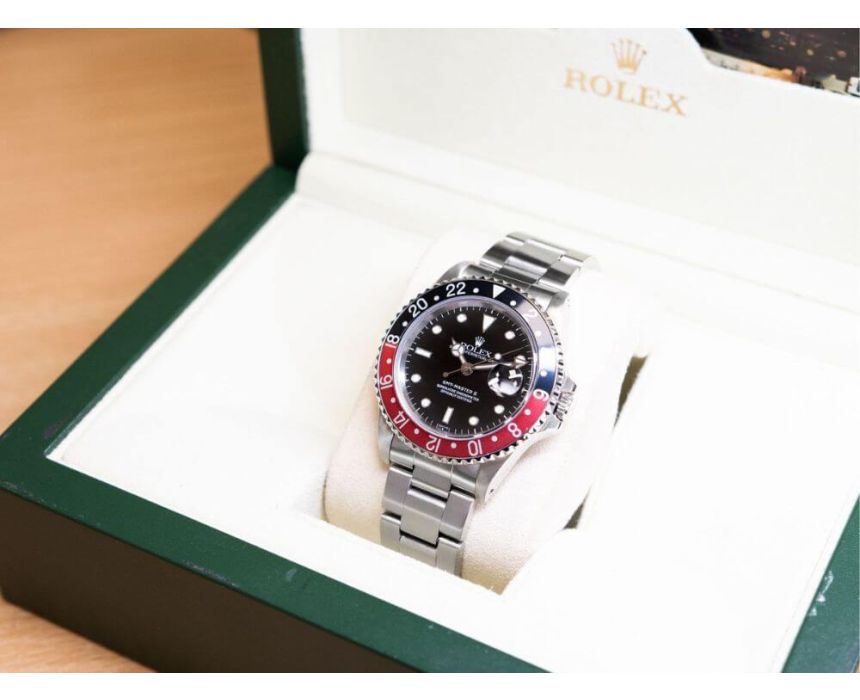
The first Daytona, the Rolex Cosmograph Daytona, was first launched in 1963 and will be celebrating its 60th year in 2023. In 1962, Rolex became the initial timekeeper of the Daytona International Speedway, home of the famous Daytona 500 and a temple of speed, with the Cosmograph Reference 6239 – the first Rolex chronograph nicknamed 'Daytona' - released to mark this union.
The first Daytona, the Rolex Cosmograph Daytona, was first launched in 1963 and will be celebrating its 60th year in 2023. In 1962, Rolex became the initial timekeeper of the Daytona International Speedway, home of the famous Daytona 500 and a temple of speed, with the Cosmograph Reference 6239 – the first Rolex chronograph nicknamed 'Daytona' - released to mark this union.
Whilst Rolex had produced several chronographs (watches with a stopwatch function) previous to the Daytona's introduction, the Reference 6239 was the first to engrave the bezel with a tachymeter where previously it featured on the dial. Confusingly, the first Daytona did not feature the Daytona inscription and was nicknamed 'Le Mans' after the Le Mans 24-hours. Instead, early Daytonas were inscribed with the word 'Cosmograph' – technically the correct name for the watch and the name that has perpetually remained on the dial.
The first Daytona, the Rolex Cosmograph Daytona, was first launched in 1963 and will be celebrating its 60th year in 2023. In 1962, Rolex became the initial timekeeper of the Daytona International Speedway, home of the famous Daytona 500 and a temple of speed, with the Cosmograph Reference 6239 – the first Rolex chronograph nicknamed 'Daytona' - released to mark this union.
Whilst Rolex had produced several chronographs (watches with a stopwatch function) previous to the Daytona's introduction, the Reference 6239 was the first to engrave the bezel with a tachymeter where previously it featured on the dial. Confusingly, the first Daytona did not feature the Daytona inscription and was nicknamed 'Le Mans' after the Le Mans 24-hours. Instead, early Daytonas were inscribed with the word 'Cosmograph' – technically the correct name for the watch and the name that has perpetually remained on the dial.
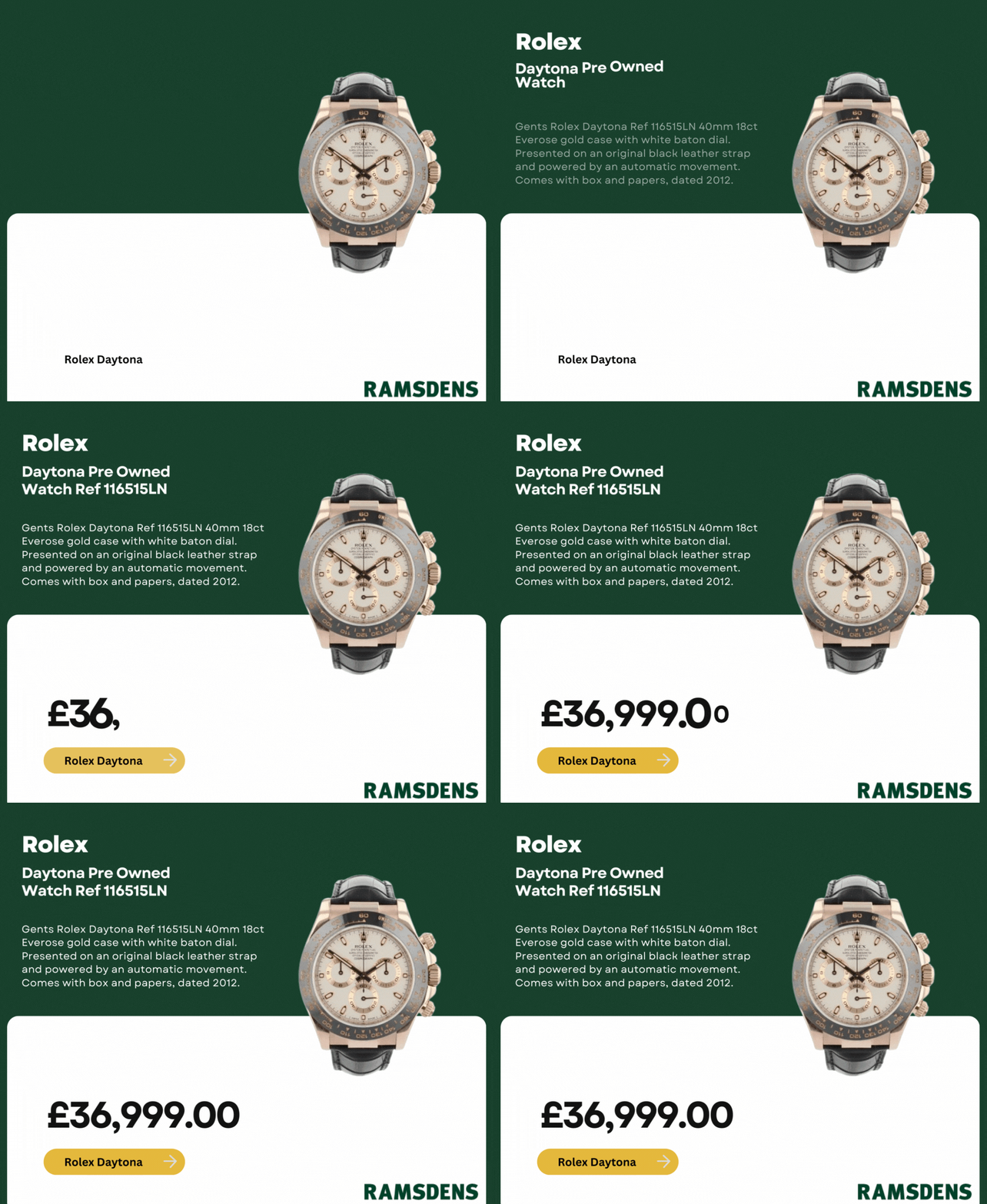
Whilst Rolex immediately conjures up images of success, affluence and performance, the Daytona had a bumpy start as was unpopular when it launched with many even considering it unsightly. Whilst discounts on new Rolex's were, have, and always will be rare, dealers considered sales on the Daytona due to their initial unpopularity.
The features of the Rolex Daytona were inspired by moto racing and its design was conceived from appealing to racing drivers and enthusiasts. What turned the tides of popularity for the Daytona was actor and race car driver Paul Newman, who famously wore his Daytona every day after it was gifted to him by his wife. In celebrating the partnership between Daytona Speedway and Rolex, the Daytona has consolidated Rolex's association with motor racing and pioneers first initiated when Malcolm Campbell first broke the 300mph barrier wearing a Rolex Oyster in 1935.
The features of the Rolex Daytona were inspired by moto racing and its design was conceived from appealing to racing drivers and enthusiasts. What turned the tides of popularity for the Daytona was actor and race car driver Paul Newman, who famously wore his Daytona every day after it was gifted to him by his wife. In celebrating the partnership between Daytona Speedway and Rolex, the Daytona has consolidated Rolex's association with motor racing and pioneers first initiated when Malcolm Campbell first broke the 300mph barrier wearing a Rolex Oyster in 1935.
Key Features of the Rolex Daytona
As with all Rolex watches, once a model has been introduced, future references simply evolve the dominant design with iterative adjustments. Such a strategy has worked wonders for Rolex allowing their models to become not only culturally significant but crucially, instantly recognisable to those in the know. Whilst aesthetics and facades may change, the fundamentals will always remain:
Tachymeter Bezel
A tachymeter is a scale that allows the wearer to measure speed based on time and a known distance. It is used by starting the stopwatch at a fixed point and stopping it at another point at a known distance. Whilst you could do the calculation speed equals distance over time, in your head, the tachymeter scale performs the calculation for you and converts it to 'units per hour'.
What differentiated the original Daytona reference (the ref. 6239) from previous Rolex chronographs was the tachymeter being engraved onto the bezel, the ring encircling the crystal glass, rather than appearing on the perimeter of the dial, for improved legibility. Indeed, Rolex produced a number of chronographs in the famous Oyster case – 'Oyster Chronographs' – throughout WWII and into the 1950s and early 1960s featuring the tachymeter on the dial. Reference 6234 is one of such references commonly collectively referred to as 'Pre-Daytona'.
The original Daytona references were fit with metallic – either stainless steel or gold – bezels, however by 1965 and the references 6241 and 6240, Rolex also introduced a black acrylic bezel. With the introduction of the second generation Daytona's, the ref. 6263 was the last of the black acrylic watches, with all second-generation Daytonas being fit with metal bezels. It was not until 2011 that Rolex introduced its Cerachrom bezel (Rolex's trademark term for its ceramic bezels, highly regarded for their scratch and fade-resistant properties along with vibrant colour) to the first Everose (rose gold) Daytona, the ref. 116515 LN.
Given it's the 60th anniversary of the Rolex Daytona in 2023, rumours are circulating as to how Rolex may celebrate. To mark its 50th, Rolex released a platinum Daytona with a brown Cerachrom bezel and blue dial. Today, new Daytonas only feature Cerachrom or gold bezels with stainless steel making its final appearance on the ref. 116520, however, some ultra-exclusive Daytonas now feature gem-set bezels
Tachymeter Bezel
A tachymeter is a scale that allows the wearer to measure speed based on time and a known distance. It is used by starting the stopwatch at a fixed point and stopping it at another point at a known distance. Whilst you could do the calculation speed equals distance over time, in your head, the tachymeter scale performs the calculation for you and converts it to 'units per hour'.
What differentiated the original Daytona reference (the ref. 6239) from previous Rolex chronographs was the tachymeter being engraved onto the bezel, the ring encircling the crystal glass, rather than appearing on the perimeter of the dial, for improved legibility. Indeed, Rolex produced a number of chronographs in the famous Oyster case – 'Oyster Chronographs' – throughout WWII and into the 1950s and early 1960s featuring the tachymeter on the dial. Reference 6234 is one of such references commonly collectively referred to as 'Pre-Daytona'.
The original Daytona references were fit with metallic – either stainless steel or gold – bezels, however by 1965 and the references 6241 and 6240, Rolex also introduced a black acrylic bezel. With the introduction of the second generation Daytona's, the ref. 6263 was the last of the black acrylic watches, with all second-generation Daytonas being fit with metal bezels. It was not until 2011 that Rolex introduced its Cerachrom bezel (Rolex's trademark term for its ceramic bezels, highly regarded for their scratch and fade-resistant properties along with vibrant colour) to the first Everose (rose gold) Daytona, the ref. 116515 LN.
Given it's the 60th anniversary of the Rolex Daytona in 2023, rumours are circulating as to how Rolex may celebrate. To mark its 50th, Rolex released a platinum Daytona with a brown Cerachrom bezel and blue dial. Today, new Daytonas only feature Cerachrom or gold bezels with stainless steel making its final appearance on the ref. 116520, however, some ultra-exclusive Daytonas now feature gem-set bezels
Sports Case
The case for the original Daytona, reference 6239, was a non-Oyster case – given it was designed for motor racing, the water-resistant Oyster case was seen as a redundant feature. However, in 1965 reference 6240 introduced the Oyster case to the Daytona and since 1971 all Daytona's have featured Oyster cases. The original reference 6239 was available in stainless steel, 14k gold and 18k gold. However, over various generations, the Daytona has become available in several precious metals including white gold, Rolesor (two-tone stainless steel and yellow gold), platinum and Everose (Rolex's 18K rose gold alloy).
The first Daytona references featured 37mm cases although this was increased to 40mm for the second generation in 1988, the size which continues to this day. Rolex also added crown guards (protrusions to the side of a watch that protect the crown – the knob used to set time) to second-generation references.
Regarding pushers (buttons which activate the additional mechanisms), the first Daytonas were equipped with pump-style pushers with screw-down pushers introduced to the ref. 6240 in 1965 which screw into the case to provide an improved seal for additional durability and water resistance. Both types of pushers work in the same way, the top pusher activates the stopwatch and pressing it again stops it with the bottom pusher resetting the chronograph to zero, however, to operate screw-down pushers they need to be unscrewed first.
The first Daytona references featured 37mm cases although this was increased to 40mm for the second generation in 1988, the size which continues to this day. Rolex also added crown guards (protrusions to the side of a watch that protect the crown – the knob used to set time) to second-generation references.
Regarding pushers (buttons which activate the additional mechanisms), the first Daytonas were equipped with pump-style pushers with screw-down pushers introduced to the ref. 6240 in 1965 which screw into the case to provide an improved seal for additional durability and water resistance. Both types of pushers work in the same way, the top pusher activates the stopwatch and pressing it again stops it with the bottom pusher resetting the chronograph to zero, however, to operate screw-down pushers they need to be unscrewed first.
Daytona Dials
In its 60-year history, the Daytona has outfitted a wide variety of dials. The first generation watches were primarily dressed in white, black, silver or champagne with contrasting sub-dials (e.g., white dials with black subdials aka the 'panda'). Whilst contrast was common in Daytona's, matching dials were rare as they weren't as legible. Given this rarity, however, matching dials now are prized by collectors such as the all-silver dial known as the Albino Daytona.
Second-generation Daytonas made of steel featured either white or black dials only. However, those forged from more precious materials were decorated with bolder dial faces including blue, green, chocolate brown, champagne and silver. Present-day Daytonas are even fitted with meteorite dials, added to solid gold models in 2021.
Second-generation Daytonas made of steel featured either white or black dials only. However, those forged from more precious materials were decorated with bolder dial faces including blue, green, chocolate brown, champagne and silver. Present-day Daytonas are even fitted with meteorite dials, added to solid gold models in 2021.
Paul Newman Rolex Daytona
You may have heard the phrase a 'Paul Newman Daytona' and this refers to a specific type of Rolex characterised by its so-called 'exotic' dial. Only about one in twenty Daytonas feature the exotic dial as they weren't as popular as the conventional Daytona dial meaning only between two to three thousand were ever created.
So what distinguishes a 'Paul Newman' dial? Well, it needs to be on a first-series Daytona i.e., one with a four-digit reference number. The Paul Newman sub-dials feature an art deco font for the numerals with the hash marks also featuring block markers instead of plain lines. Each of the three subdials also features crosshairs in its centre. The outer track of the main dial also features a contrasting colour that matches the colour of the subdials. On some Paul Newman models, the hash marks of the outer track were coloured red. This was available on the earliest Paul Newman Daytona ref. 6239 known as three-colour watches. References 6262 and 6264 were the last of the three colour dials as the final references, the 6265 and 6263, used a two-colour dial with an Oyster case and screw-down pushers.
Paul Newman's personal Paul Newman was gifted to him by his wife with the words 'Drive Carefully Me' engraved on the back which he later gave to James Cox, his daughter's boyfriend at the time. The watch was sold at auction in 2017 for a record $17.8 million which, at the time, made it the most expensive watch ever sold.
So what distinguishes a 'Paul Newman' dial? Well, it needs to be on a first-series Daytona i.e., one with a four-digit reference number. The Paul Newman sub-dials feature an art deco font for the numerals with the hash marks also featuring block markers instead of plain lines. Each of the three subdials also features crosshairs in its centre. The outer track of the main dial also features a contrasting colour that matches the colour of the subdials. On some Paul Newman models, the hash marks of the outer track were coloured red. This was available on the earliest Paul Newman Daytona ref. 6239 known as three-colour watches. References 6262 and 6264 were the last of the three colour dials as the final references, the 6265 and 6263, used a two-colour dial with an Oyster case and screw-down pushers.
Paul Newman's personal Paul Newman was gifted to him by his wife with the words 'Drive Carefully Me' engraved on the back which he later gave to James Cox, his daughter's boyfriend at the time. The watch was sold at auction in 2017 for a record $17.8 million which, at the time, made it the most expensive watch ever sold.
Rolex Daytona Bracelets
Most Daytonas come complete with an Oyster bracelet (Rolex's sportiest bracelet of its core four metal bracelet types: Oyster, Jubilee, President and Pearlmaster) matching the alloy of the case. The Oyster comes available in stainless steel, gold, platinum and Rolesor (two-tone). Many vintage Rolex Daytona featured alligator leather straps, indeed Paul Newman wore his Daytona with a black alligator leather strap. However, there hasn't been a Daytona reference since 2011 featuring a leather strap. Today, an increasing number of references are available with the Oysterflex bracelet, Rolex's take on a rubber bracelet featuring a titanium/nickel alloy encased in a black elastomer, since its introduction to the Daytona in 2017.
Daytona Generations: First Generation 1963-1988
With 60 years of history and iteration, it can be difficult to keep track of the various references and their characteristics. However, whilst many small changes occur with every reference, three major changes have occurred during the Daytona's life with each change marking a new 'generation'.
The first generation of Daytonas characterises models built between the very first Daytona in 1963 to 1988. The first generation alternatively called the original series, all have four-digit reference numbers. More importantly, however, all the first-generation Rolex Daytonas feature a manually-wound movement powered by the Valijoux 72 first, then the Valijoux 722 and then the Valijoux 727. The first-generation Daytonas were also only available in 37mm cases and featured acrylic crystal (in watchmaking, the crystal refers to the glass that covers the watch face). Originally featuring pump-style pushers, the first generation Daytonas then moved to screw-down pushers to improve the watch's durability.
Daytona Generations: First Generation 1963-1988
With 60 years of history and iteration, it can be difficult to keep track of the various references and their characteristics. However, whilst many small changes occur with every reference, three major changes have occurred during the Daytona's life with each change marking a new 'generation'.
The first generation of Daytonas characterises models built between the very first Daytona in 1963 to 1988. The first generation alternatively called the original series, all have four-digit reference numbers. More importantly, however, all the first-generation Rolex Daytonas feature a manually-wound movement powered by the Valijoux 72 first, then the Valijoux 722 and then the Valijoux 727. The first-generation Daytonas were also only available in 37mm cases and featured acrylic crystal (in watchmaking, the crystal refers to the glass that covers the watch face). Originally featuring pump-style pushers, the first generation Daytonas then moved to screw-down pushers to improve the watch's durability.
Daytona Generations: Second Generation 1988-1999
The major change between the first and second-generation Rolex Daytonas was the introduction of self-winding movements. Since 1988 and the introduction of the reference 16520, second-generation Daytonas featured 5-digit reference numbers and also all became automatic representing the transition of the Daytona from vintage to modern. At the time of the introduction of the 16520, Rolex did not have an automatic chronograph movement of its own and so Rolex turned to Zenith and its El Primero movement – so called as it is considered the world's first automatic chronograph calibre. Rolex significantly modified the calibre to their own standards labelling it the Caliber 4030, but in testimony to Zenith's contribution to the Daytona, second-generation Rolex's are commonly referred to as Zenith Daytonas.
The case diameter also increased from 37mm to 40mm, a size at which it has remained and the acrylic crystal was replaced by sapphire. A significant change in the aesthetic was also brought in through the introduction of elongated arrow hour markers from the smaller blocks of first-generation references. The sub-dials also came available with a contrasting outer track with the inside sub-dial now matching, as opposed to contrasting with, the main dial colour.
The case diameter also increased from 37mm to 40mm, a size at which it has remained and the acrylic crystal was replaced by sapphire. A significant change in the aesthetic was also brought in through the introduction of elongated arrow hour markers from the smaller blocks of first-generation references. The sub-dials also came available with a contrasting outer track with the inside sub-dial now matching, as opposed to contrasting with, the main dial colour.
Daytona Generations: Third Generation 2000-Present Day
In the decades following the second generation, Rolex became far more vertically integrated, as initially Rolex, like many other watch brands, bought in many of their movements and technologies rather than owned it themselves. The result of this integration for the Daytona was the launch of Rolex's own automatic chronograph movement: the calibre 4130. This calibre features fewer components, increasing its reliability but also featured a 72-hour power reserve and vertical clutch system which prevented jittering when starting or stopping the complication.
Third-generation Daytonas were also the first to be available in platinum or Everose (Rolex's rose gold alloy) and equipped with Cerachrom bezels. The seconds sub-dial was also switched from 9 o'clock (first and second generations) to 6 o'clock. The left sub-dial is a 12-hour counter, the bottom a second counter and the right sub-dial a thirty-minute counter.
Preowned or Buying New Daytonas
Want a brand new Rolex Daytona? Good luck to you. Waiting lists for a new Rolex Daytona are north of 5 years and that's assuming you already have a history as an established Rolex customer and that you also happen to be the best mate of the dealer. Rolex is rumoured to produce around 1 million watches per year, however, demand being so high means that there are around 100 prospective buyers for every Rolex watch.
As a result, the second-hand market is where opportunities for owning a Daytona start to open up. However, notions of both rarity and immediate accessibility put a premium on some second-hand models with first-generation Daytonas selling for significantly more than a new Daytona.
Pre-owned Rolex Daytonas do allow you to immediately get your hands on one of the most sought-after, significant and treasured horological artefacts ever produced. What vintage models and newly produced Rolex Daytonas have in common is their exclusivity. Due to their initial unpopularity, few Daytonas were produced and references with particularly rare features could be once-in-a-lifetime opportunities.
Third-generation Daytonas were also the first to be available in platinum or Everose (Rolex's rose gold alloy) and equipped with Cerachrom bezels. The seconds sub-dial was also switched from 9 o'clock (first and second generations) to 6 o'clock. The left sub-dial is a 12-hour counter, the bottom a second counter and the right sub-dial a thirty-minute counter.
Preowned or Buying New Daytonas
Want a brand new Rolex Daytona? Good luck to you. Waiting lists for a new Rolex Daytona are north of 5 years and that's assuming you already have a history as an established Rolex customer and that you also happen to be the best mate of the dealer. Rolex is rumoured to produce around 1 million watches per year, however, demand being so high means that there are around 100 prospective buyers for every Rolex watch.
As a result, the second-hand market is where opportunities for owning a Daytona start to open up. However, notions of both rarity and immediate accessibility put a premium on some second-hand models with first-generation Daytonas selling for significantly more than a new Daytona.
Pre-owned Rolex Daytonas do allow you to immediately get your hands on one of the most sought-after, significant and treasured horological artefacts ever produced. What vintage models and newly produced Rolex Daytonas have in common is their exclusivity. Due to their initial unpopularity, few Daytonas were produced and references with particularly rare features could be once-in-a-lifetime opportunities.
Rolex Daytona Watches