











How Omega Landed On The Moon
On May 25th, 1961, John F. Kennedy delivered a speech that ignited a country's fascination with Space exploration. He declared that by the end of the decade, man would walk on the surface of the Moon.
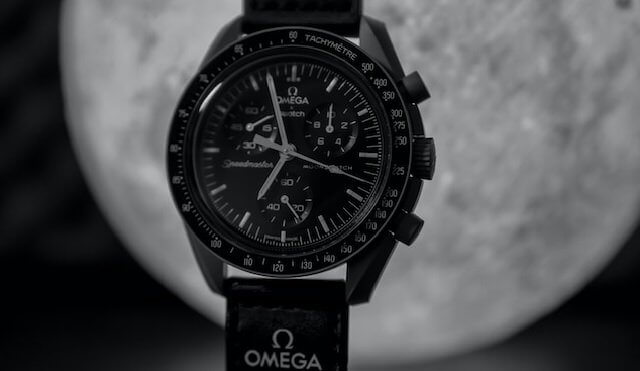
The mission to land on the Moon accelerated the development of spacecrafts and lunar technology. With no expense spared and the pressure of asserting dominance in technological and intellectual superiority, the mission to put a man on the Moon was accomplished by NASA's astronaut Lance Armstrong. Broadcasted to the world, Armstrong alluded to the significance of the mission to mankind, but it was also a significant event for the Swiss watchmaker Omega. Strapped to the wrist of Lunar Module pilot Buzz Aldrin was a watch that became an instant icon in chronographs, asserting its dominance in timepieces and being one of the best-selling watches ever. That watch was the Omega Speedmaster.
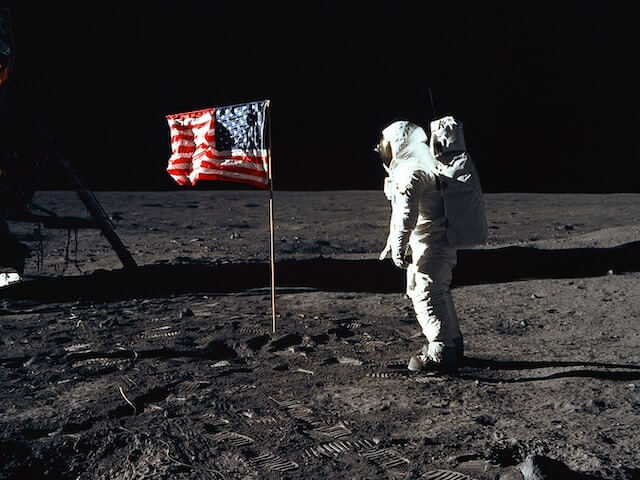
Buzz Aldrin didn't just wear the Speedmaster as a marketing stunt. NASA engineer Jim Regan selected the watch after passing tests that were designed to break the watch. However, the Omega Speedmaster succeeded where all other chronographs failed and attained official certification from NASA. The Omega Speedmaster became the only watch qualified for manned space missions and extravehicular activity.
Omega Watches
The NASA Test
To find the watch suitable to take into outer space, Ragen requested the leading watch manufacturers to send their very best chronographs for testing. A detailed list of specifics were sent, with features including accuracy, pressure integrity and readability. Out of the ten suggested manufacturers, only three sent a watch they thought was suitable for John F. Kennedy's optimistic mission. These were Rolex 6238 'Pre-Daytona', the Longines Wittnaurer 242T and the Omega Speedmaster. Each watch was put through a series of rigorous tests, one that would test each watch to the very edge of its capabilities. Each test was designed to replicate the pressures of space and more. The results ended in a landslide for the Omega Speedmaster.
In an interview with Brummel in 2020, Jim Ragen reminised on the tests and his relief when the Speedmaster passed.
"Our set went through 10 different environments. Some of them were totally unrealistic. Plus or minus 250 degrees Fahrenheit. That's tough on a watch. Thermal vacuum was tough on a watch. The Omega made it through all the testing and when that happened, before I announced who had made it, I went back to the astronauts and said, "which one of these do you like?"; and thank goodness, they liked the Omegas the best"
According to Regan, the Rolex and the Longline watches failed at the very first hurdle, meaning that the Omega Speedmaster was Regan's last hope. Fortunately, the watch passed, and after a few modifications, the Speedmaster 105.012 would become the first watch capable for space exploration.
In an interview with Brummel in 2020, Jim Ragen reminised on the tests and his relief when the Speedmaster passed.
"Our set went through 10 different environments. Some of them were totally unrealistic. Plus or minus 250 degrees Fahrenheit. That's tough on a watch. Thermal vacuum was tough on a watch. The Omega made it through all the testing and when that happened, before I announced who had made it, I went back to the astronauts and said, "which one of these do you like?"; and thank goodness, they liked the Omegas the best"
According to Regan, the Rolex and the Longline watches failed at the very first hurdle, meaning that the Omega Speedmaster was Regan's last hope. Fortunately, the watch passed, and after a few modifications, the Speedmaster 105.012 would become the first watch capable for space exploration.
The Moon Landing
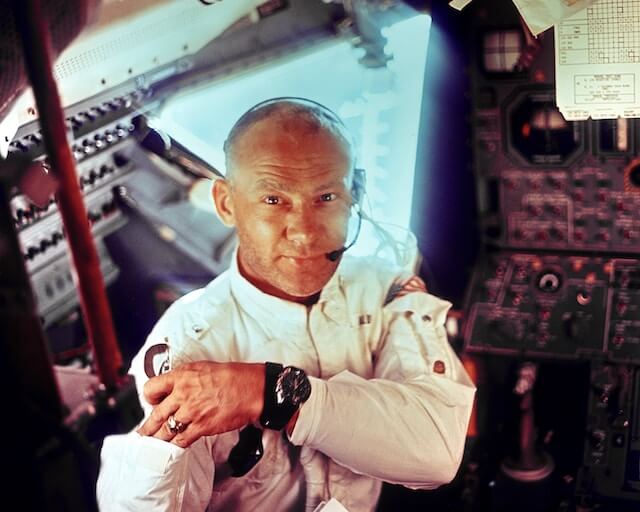
The day of the Apollo 11 launch finally arrived. On July 16th, 1969, the Apollo 11 Lunar Module took off from Cape Kenedy, carrying Neil Armstrong, Buzz Aldrin, and Michael Collins, all with an Omega Speedmaster strapped to their wrists. With the eyes of 650 million people glued to their small television sets, the three men attempted something most could only imagine.
The significance of the Omega Speedmaster was vital to the Apollo 11 mission. Everything was timed to the millisecond. The takeoff. The ejection into translunar orbit. And every course correction. On July 20th, 1969, 109 hours and 42 minutes into the Apollo 11 mission, 'The Eagle' landed on the surface of the Moon. Neil Armstrong accomplished the extraordinary, as millions around our planet watched the astronaut relay those famous ten words. Buzz Aldrin took his very own steps onto the Moon, and it was he who wore the Omega Speedmaster. The Omega Speedmaster 105.012 instantly became the most valuable Chronograph to exist.
Three days after man stepped onto the Moon, the three astronauts on the Apollo 11 Spacecraft splashed down in the Pacific Ocean, completing a mission set out by President John F. Kennedy in 1961. Since this mission, the Speedmaster became known as the Omega 'Moonwatch'.
The significance of the Omega Speedmaster was vital to the Apollo 11 mission. Everything was timed to the millisecond. The takeoff. The ejection into translunar orbit. And every course correction. On July 20th, 1969, 109 hours and 42 minutes into the Apollo 11 mission, 'The Eagle' landed on the surface of the Moon. Neil Armstrong accomplished the extraordinary, as millions around our planet watched the astronaut relay those famous ten words. Buzz Aldrin took his very own steps onto the Moon, and it was he who wore the Omega Speedmaster. The Omega Speedmaster 105.012 instantly became the most valuable Chronograph to exist.
Three days after man stepped onto the Moon, the three astronauts on the Apollo 11 Spacecraft splashed down in the Pacific Ocean, completing a mission set out by President John F. Kennedy in 1961. Since this mission, the Speedmaster became known as the Omega 'Moonwatch'.
The Omega Legacy
The Omega Speedmaster continued to be a part of explorations into space for many years after. Used on a further five Lunar landings until 1972 on the Apollo 17 mission, where Eugene Cernan and Harrison Schmitt became the last two people to step foot on the Moon. Extraordinarily, the Speedmaster once again showed its impressive capabilities by spending 879 days orbiting the Earth aboard the International Space Station on the wrist of Cosmonaut Gennady Padalka.
But it will be the Apollo 13 mission that the Omega Speedmaster will be known for by most, as without it, three astronauts wouldn't have made it back to Earth. The Apollo 13 Lunar Module suffered from an oxygen tank explosion, leading the spacecraft to veer off course in a direction that would mean it would enter the space atmosphere with no chance of return. To return to Earth, the three astronauts had to adjust the spacecraft's direction manually. This required precisely 14 seconds burn of fuel. No more and no less.
The manoeuvre worked. And the three astronauts made a safe return to Earth.
James Lovell recalled the events on the Apollo 13 mission. "We had to burn the engine. Have it only for a certain length of time: 14 seconds…We used the (Omega) watch that Jack had on his wrist and I had to control the Spacecraft. Jack timed the burn on the engine to make the correction to get back home safely."
The legacy of the Omega Moonwatch continues. Now an Omega ambassador, Buzz Aldrin claimed he would help design a chronograph usable on Earth and Mars. And what occurred shows Aldrin's determination that humans will one day step on the surface of Mars. The Speedmaster X33 Marstimer is a duel-time watch for Earth and Mars, which can record 24 hours on Earth, as well as a day on Mars at 24 hours and 39 minutes.
This means we may see Omega making more history beyond our atmosphere.
But it will be the Apollo 13 mission that the Omega Speedmaster will be known for by most, as without it, three astronauts wouldn't have made it back to Earth. The Apollo 13 Lunar Module suffered from an oxygen tank explosion, leading the spacecraft to veer off course in a direction that would mean it would enter the space atmosphere with no chance of return. To return to Earth, the three astronauts had to adjust the spacecraft's direction manually. This required precisely 14 seconds burn of fuel. No more and no less.
The manoeuvre worked. And the three astronauts made a safe return to Earth.
James Lovell recalled the events on the Apollo 13 mission. "We had to burn the engine. Have it only for a certain length of time: 14 seconds…We used the (Omega) watch that Jack had on his wrist and I had to control the Spacecraft. Jack timed the burn on the engine to make the correction to get back home safely."
The legacy of the Omega Moonwatch continues. Now an Omega ambassador, Buzz Aldrin claimed he would help design a chronograph usable on Earth and Mars. And what occurred shows Aldrin's determination that humans will one day step on the surface of Mars. The Speedmaster X33 Marstimer is a duel-time watch for Earth and Mars, which can record 24 hours on Earth, as well as a day on Mars at 24 hours and 39 minutes.
This means we may see Omega making more history beyond our atmosphere.
The Omega Speedmaster Moonwatch
Omega has continued to create various versions of the Moonwatch to this very day. Limited editions commemorated the watch's significance in the history of NASA space explorations. You can learn about the entire history of the Omega Speedmaster and the special editions of the Chronograph that have since been released in our Omega Speedmaster guide.
At Ramsdens Jewellery, we have a large selection of Omega watches for you to discover, including models of the Omega Speedmaster. So, if you require a Chronograph that can withstand the pressures beyond our atmosphere, discover our entire collection of Omega Speedmaster watches.
At Ramsdens Jewellery, we have a large selection of Omega watches for you to discover, including models of the Omega Speedmaster. So, if you require a Chronograph that can withstand the pressures beyond our atmosphere, discover our entire collection of Omega Speedmaster watches.
The Omega Speedmaster Moonwatch